

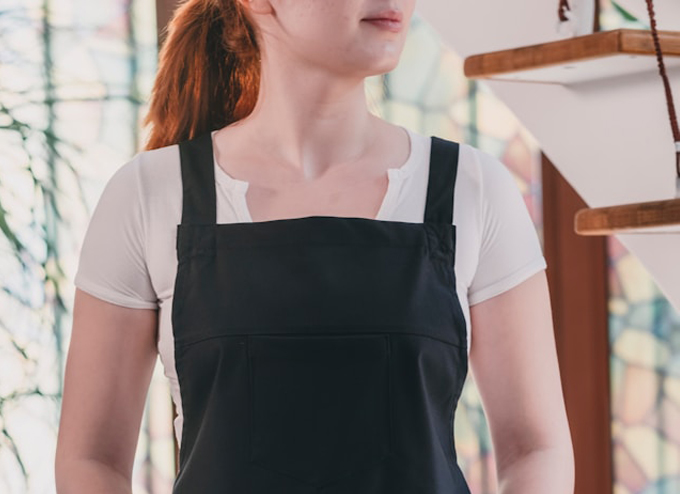
If you are kitting out a team for the first time, the apron aisle can look confusing. Tabard, bib, cobbler, waist — the names get used loosely, and the wrong choice usually shows up within a fortnight as staff quietly stop wearing them. This guide sets out what each style actually does well.
Tabard aprons
A tabard pulls over the head and fastens at the sides, covering the front and back of the body. Because there is nothing to tie at the waist, staff can put one on in seconds and there are no trailing straps near equipment. That makes tabards the default in cleaning, care and nursery work, where people change garments several times a shift.
Look for side fastenings that adjust, so one size covers a range of staff. Our tabard aprons are cut with this in mind.
Bib aprons
The bib apron is the familiar chest-to-knee style with a neck loop and waist ties. It gives the most front coverage of any style, which is why it dominates catering and food prep. The trade-off is that the back is open, so it protects against splashes from the front only.
If your team handles hot liquids or sauces, the extra chest coverage is worth it. Browse bib aprons for the full range.
Cobbler aprons
A cobbler is effectively a tabard with more generous side coverage and usually two or more front pockets. It suits roles where people carry small tools or cloths all day — housekeeping, retail stockrooms, craft work and salons. See our cobbler aprons.
Waist aprons
Waist aprons cover from the waist down and are mostly about pockets and speed of service rather than protection. Front-of-house staff use them for order pads, card machines and pens. Our waist aprons are sized for a full shift.
A quick way to choose
- Frequent changes, hygiene-led work — tabard.
- Hot work, heavy splashing — bib.
- Carrying tools or cloths — cobbler.
- Service and till work — waist.
Do not forget the rules that apply to you
Aprons used in food businesses sit alongside your wider hygiene obligations — the Food Standards Agency business guidance is the place to check what your premises must do. For catering safety more broadly, the HSE catering pages cover slips, burns and protective clothing.
Ordering for a whole team? See our bulk apron options, or get in touch and we will help you size an order.