

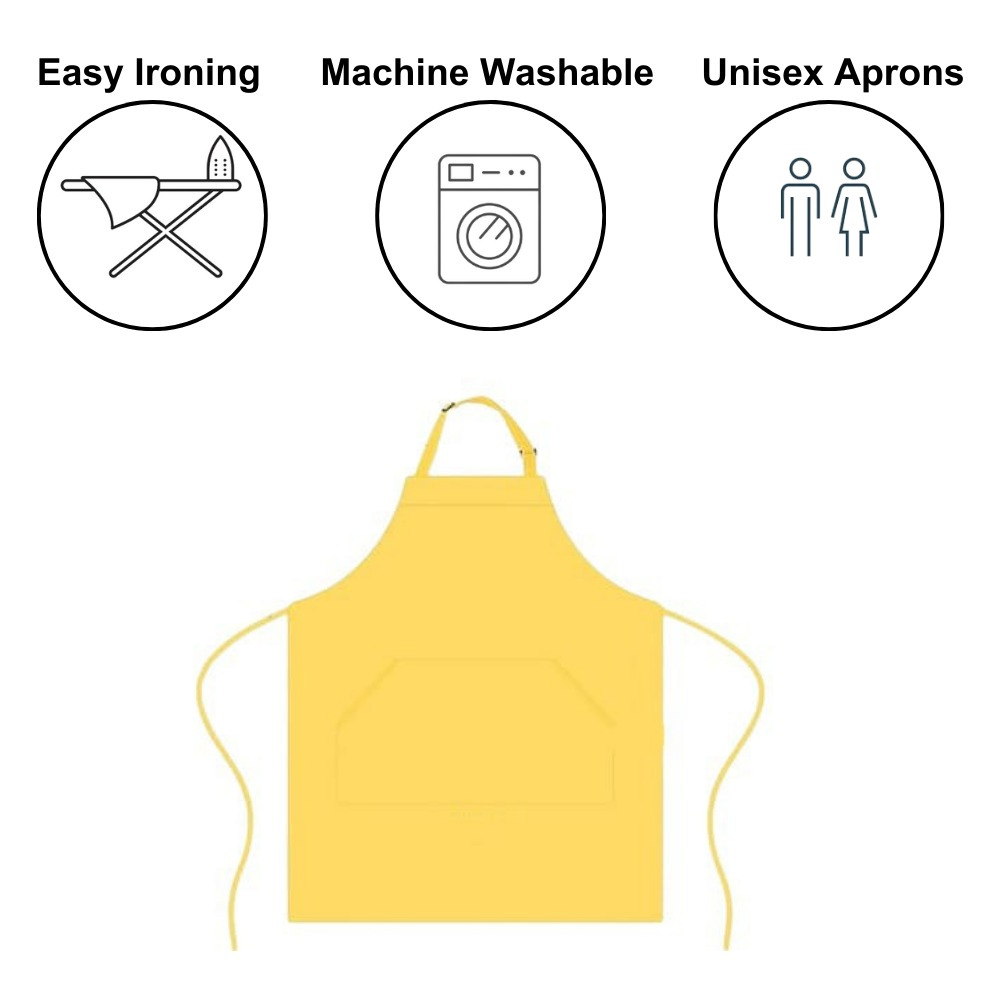
Aprons are consumables, but they last far longer than most businesses get out of them. Nearly all early replacement comes down to a handful of laundry habits. These are the ones worth fixing.
Wash temperature
For general catering and retail use, 40°C handles everyday soiling and is gentler on colour. For care settings, or anywhere hygiene requires it, 60°C is the usual standard. Going hotter than the garment is rated for does not make it cleaner — it just shortens its life.
Deal with stains before the wash, not after
Heat sets stains permanently. Once an apron has been through a hot cycle with grease or sauce on it, that mark is usually there for good.
- Grease and oil — a drop of washing-up liquid worked in before washing.
- Tomato and curry — rinse in cold water first; hot water sets them.
- Blood — cold water only, never hot.
- Tea and coffee — rinse promptly, then a normal wash.
Do not overload the machine
An overloaded drum does not rinse properly, so detergent stays in the fabric. That is what leaves aprons feeling stiff and looking grey after a few months. Washing fewer items more often genuinely works out cheaper.
Skip the fabric softener
Softener leaves a coating that reduces absorbency — the opposite of what an apron is for. It also builds up on polycotton and traps odours over time.
Drying and storage
Polycotton dries quickly, so a low tumble setting or a simple line is enough. High heat is the main cause of premature wear. Hang aprons rather than folding them into a drawer; creases set into the blend and a crumpled apron reads as scruffy however clean it is.
Know when to retire one
Fraying ties, thinning fabric at the waist or a fastening that no longer holds are all end-of-life signals. In food and care environments a damaged apron is a hygiene problem, not just a cosmetic one — the HSE catering guidance is worth a read on protective clothing in practice.
Time to replace a set? Our bulk aprons work out considerably cheaper per unit than replacing piecemeal.